
Seal first, then insulate
Attic Insulation & Air Sealing in Kalamazoo, MI
Most heat loss starts at the attic floor. We close the leaks and add depth so the house holds its heat.
- Free estimates after an on-site look
- Every area quoted with its material, thickness and R-value
- Moisture, wiring and leak problems pointed out before we cover anything
The Top of the House Matters Most
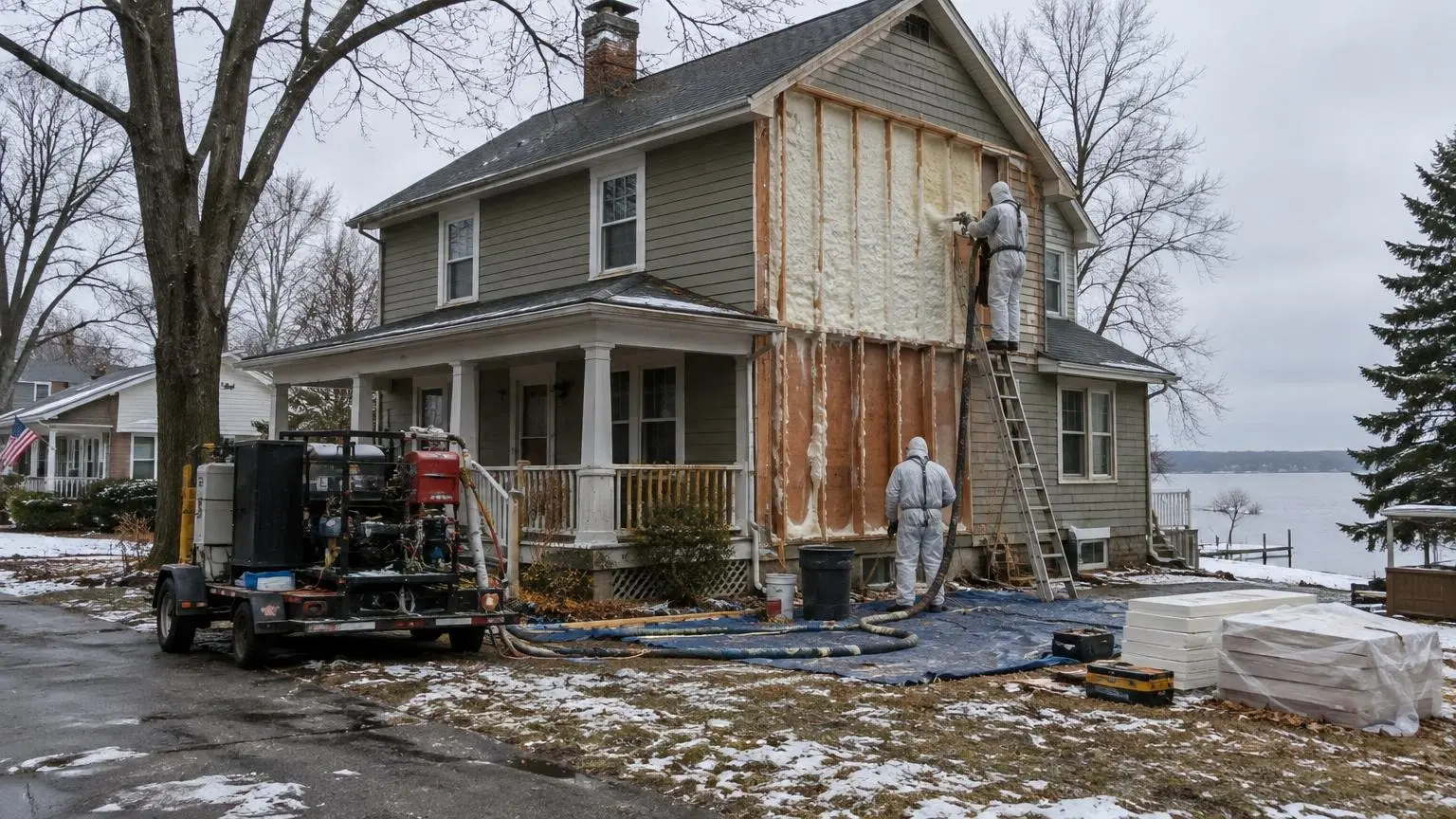
Attic insulation and air sealing usually give the biggest return of any insulation work in a Kalamazoo home. Warm air rises and escapes through gaps in the ceiling, and cold air gets pulled in lower down to replace it. If the attic floor has open chases, unsealed light fixtures and a thin, settled layer of old fill, no thermostat setting will fix the cold rooms. We seal those openings first, then add insulation to the depth the climate calls for.
How much is enough here
Kalamazoo County is in Climate Zone 5. The Department of Energy recommends R-60 in an attic with no insulation, and R-49 added on top if 3 to 4 inches are already there. Michigan's 2016 energy code set R-38 for new ceilings, and the 2021 IECC raises that to R-60, so many attics in older homes fall well short of either number. Measuring the existing depth and checking its type is part of our visit.
Air sealing comes first
Insulation slows heat moving through it, but air leaks carry heat around it. We seal the paths that leak most: top plates on interior walls, plumbing vent and flue chases, wiring holes, recessed light housings, soffits over kitchen cabinets, and the attic hatch or pull-down stairs. Foam, caulk and rigid blocking each have their place, and fire-rated materials go around chimneys and flues.
Ice dams and frosty nails
Ice dams form when attic heat melts snow on the roof and the water refreezes at the cold eaves. With lake-effect snow common around Kalamazoo, a leaky attic plus a snowy week can push meltwater under shingles. Sealing the ceiling and adding insulation keeps the roof deck colder and evenly cold. Frost on the tips of roofing nails in January is another sign warm, damp air is getting into the attic.
Blown-in or foam on the floor?
For most open attics, blown-in cellulose or fiberglass over a sealed ceiling is the most cost-effective route. HomeGuide lists blown-in at about $0.90 to $2.40 per square foot in its attic guide. Foam on the attic floor costs more and is mainly useful in tight spaces or around complicated framing. Foam on the roof deck changes the attic into conditioned space, which can make sense when ducts or a furnace sit up there.
Older homes, finished attics and kneewalls
Story-and-a-half houses are common in Kalamazoo's older neighborhoods. They have short kneewalls, sloped ceilings and small attic pockets that are hard to reach. Those spots often get dense-pack or closed-cell foam, while the flat ceiling above gets loose fill. We also check for vermiculite in older attics; if it is there, it should be tested before anyone disturbs it.
Ventilation and baffles
When the attic floor gets deeper, the soffit vents have to stay clear. We install baffles at the eaves so the new insulation does not block airflow to the roof deck.
Call (269) 230-2389 or request an estimate, and we will measure your attic and show you what it needs. Get a free estimate
What This Covers
The pieces of an attic job, from sealing to the final depth.
Bypass sealing
Closing top plates, chases, wire holes and light housings with foam, caulk or blocking.
Blown-in cellulose or fiberglass
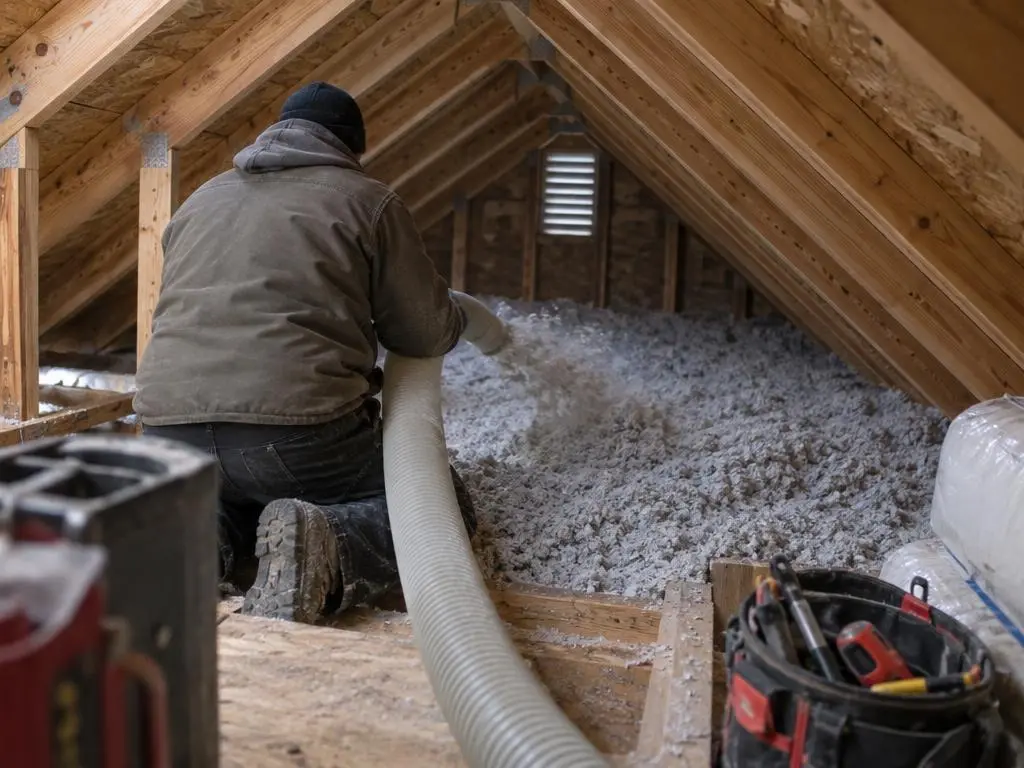
Loose fill added over the sealed ceiling to the depth and R-value on the estimate.
Hatch and attic stair covers
Weatherstripping and an insulated cover so the access does not become the biggest leak in the attic.
Eave baffles
Vent chutes that keep soffit airflow open as insulation gets deeper.
Kneewalls and sloped ceilings
Foam or dense-pack in the hard-to-reach spots of story-and-a-half and finished-attic homes.
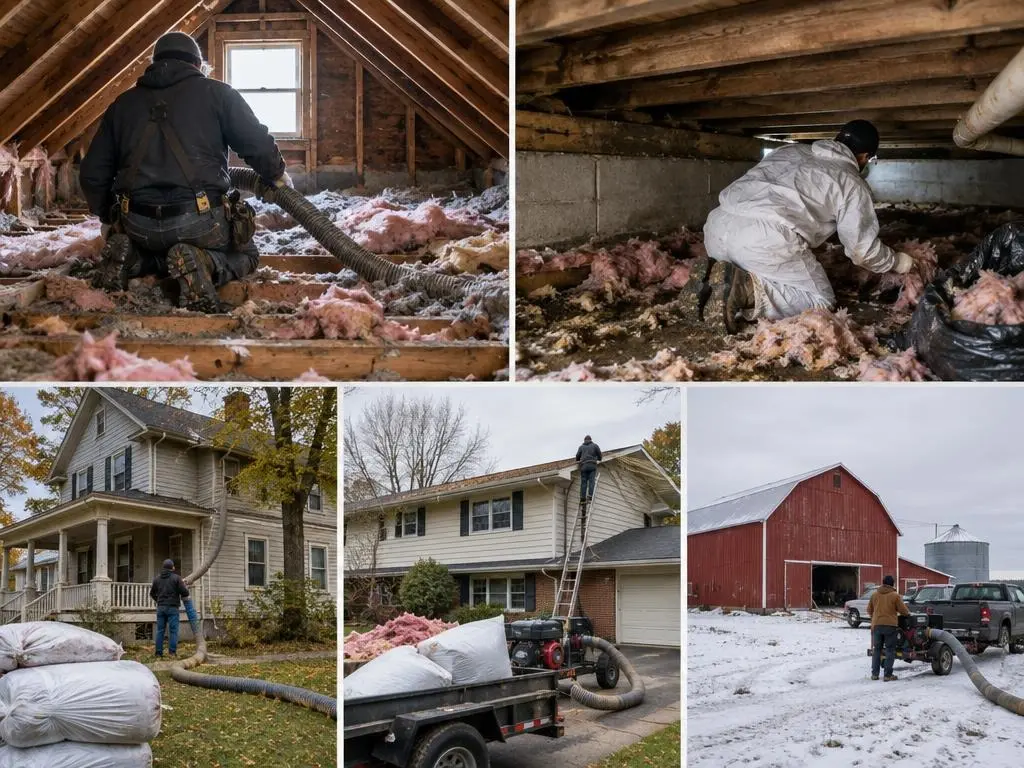
Published Attic Insulation & Air Sealing Costs
| Job | Range and source |
|---|---|
| Attic insulation, average job | $1,000 to $2,700, near $1,800 on average (HomeGuide) |
| Air sealing | $350 to $3,000 (HomeGuide) |
| Blown-in, attic | $0.90 to $2.40 per sq ft (HomeGuide attic guide) |
| Spray foam, attic floor | $1,100 to $6,800 (HomeGuide) |
| Spray foam, roof deck | $1,500 to $9,000 (HomeGuide) |
| Spray foam attic, existing home | $2,500 to $12,000 (Fixr) |
| Removing old insulation | $1 to $2 per sq ft (HomeGuide) |
These come from HomeGuide's January 2026 attic guide and Fixr's 2025 spray foam guide and are national, not local. How much sealing the attic needs, the target depth, access and any removal decide the total. We price after looking, and the figure on our written estimate is the price.
How It Works
1. Measure and inspect
We check depth, type and condition of what is there, and look for leaks, vermiculite and ventilation problems.
2. Seal the ceiling
Bypasses, chases and the hatch are sealed before any new insulation goes in.
3. Baffle the eaves
Vent chutes keep air moving from the soffits.
4. Add insulation
Loose fill or foam goes in to the written depth, and we mark the depth so you can check it.
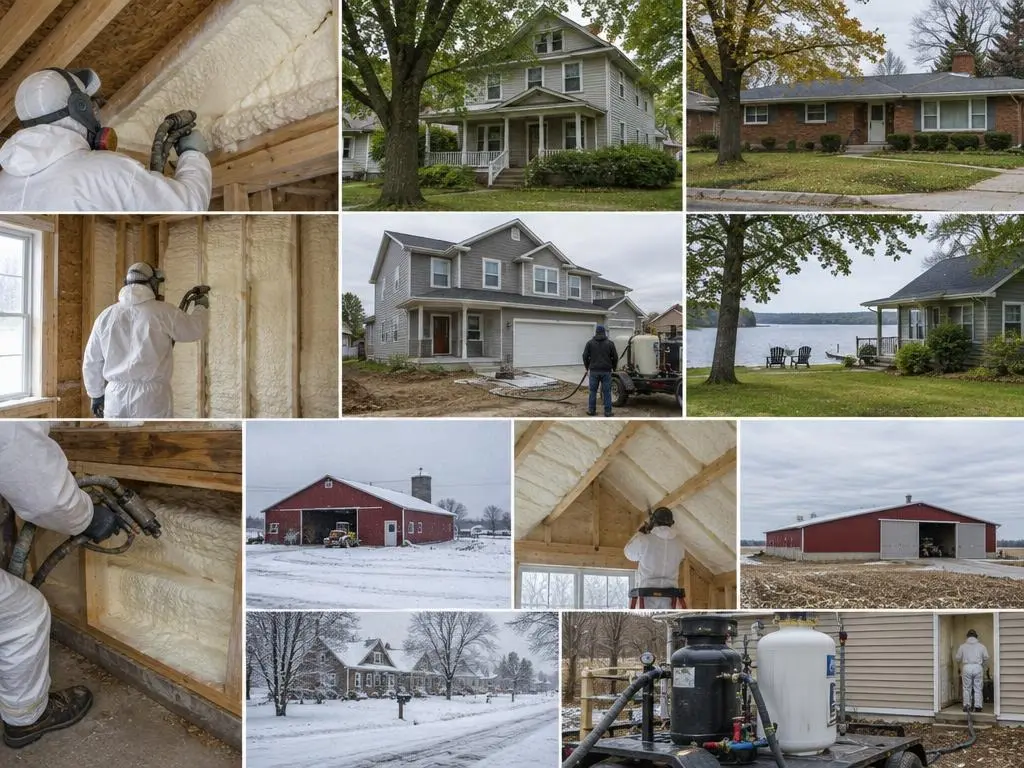
Why Choose Us for Attic Insulation & Air Sealing
Sealing is included
We do not just blow more fill over open leaks.
Depth you can check
Depth markers in the attic match the number on the estimate.
Rebate details ready
Square footage and R-value are written down for a utility rebate form.
Attic Insulation & Air Sealing Questions
What R-value should a Kalamazoo attic have?
The Department of Energy recommends R-60 for an uninsulated attic in Zone 5, which covers Kalamazoo County, or adding R-49 over 3 to 4 inches of existing insulation. We measure what you have and quote what it takes to get there.
Will attic insulation stop ice dams?
It helps a lot when it is paired with air sealing, because most ice dams start with warm air leaking into the attic. Ventilation and gutter or roof details also play a part, and we point out anything we see.
Does Consumers Energy give a rebate for attic insulation?
Its current chart lists attic rebates for at least 500 square feet, ranging from $125 to $200 for combined gas and electric customers depending on the final R-value, with lower amounts for electric-only customers. Check the current chart before starting.
Do you have to remove old insulation first?
Not always. Dry, clean insulation can stay, with sealing done around it and new fill added on top. Wet, moldy, rodent-soiled or suspect material should come out.
Attic Insulation & Air Sealing Service Areas
- Spray Foam Insulation in Kalamazoo, MI
- Spray Foam Insulation in Portage, MI
- Spray Foam Insulation in Oshtemo Township, MI
- Spray Foam Insulation in Texas Township, MI
- Spray Foam Insulation in Kalamazoo Township, MI
- Spray Foam Insulation in Comstock Township, MI
- Spray Foam Insulation in Parchment, MI
- Spray Foam Insulation in Richland, MI
- Spray Foam Insulation in Galesburg, MI
- Spray Foam Insulation in Augusta, MI
- Spray Foam Insulation in Vicksburg, MI
- Spray Foam Insulation in Schoolcraft, MI
- Spray Foam Insulation in Plainwell, MI
- Spray Foam Insulation in Otsego, MI
- Spray Foam Insulation in Allegan, MI
- Spray Foam Insulation in Paw Paw, MI
- Spray Foam Insulation in Mattawan, MI
- Spray Foam Insulation in Lawton, MI
- Spray Foam Insulation in Three Rivers, MI
Get an Attic Insulation & Air Sealing Estimate
We will measure your attic and show you the depth it needs.